
Where to Keep Your Emergency Fund (And Where Not To)
Your emergency fund needs to be safe, accessible, and earning interest. Here's exactly where to put it and which accounts to avoid.
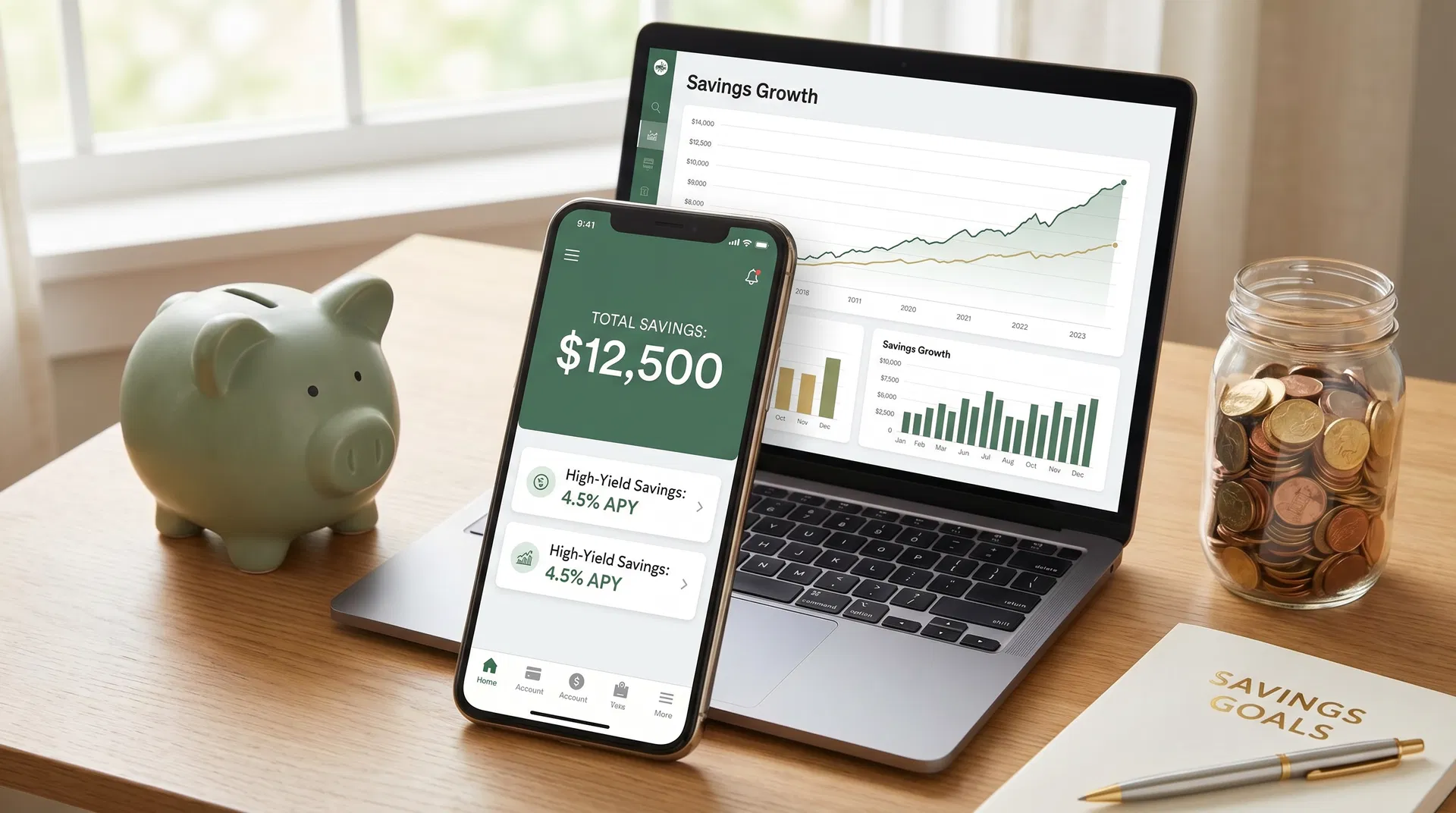
Where to Keep Your Emergency Fund (And Where Not To)
You've done the hard work of saving up an emergency fund. Maybe it's $1,000, maybe it's $10,000, maybe it's more. But now comes a question that trips up a lot of people: where should you actually put it?
The wrong answer can cost you hundreds of dollars a year in missed interest. Or worse, it can put your money at risk when you need it most. The right answer is simpler than you might think, but it depends on balancing three things: safety, access, and growth.
Run your own numbers: Use our free Emergency Fund Calculator to figure out how much you should have saved before deciding where to put it.
The Three Rules of Emergency Fund Placement
Before we get into specific accounts, here are the three non-negotiable rules:
Rule 1: It has to be safe. Your emergency fund is insurance, not an investment. It should never lose value. That means no stocks, no crypto, no volatile assets.
Rule 2: It has to be accessible. When your car breaks down at 7 PM on a Friday, you need to be able to get to your money within 24 to 48 hours. Anything locked up for months or years doesn't qualify.
Rule 3: It should earn something. Your money shouldn't just sit there losing value to inflation. In 2026, there's no reason to accept 0.01% interest when 4% to 5% accounts are widely available.
The Best Place: High-Yield Savings Account (HYSA)
For most people, a high-yield savings account is the clear winner. Here's why:
| Feature | High-Yield Savings | Regular Savings | Checking Account |
|---|---|---|---|
| APY (2026) | 4.0% - 5.0% | 0.01% - 0.10% | 0.00% - 0.01% |
| FDIC Insured | Yes | Yes | Yes |
| Access Time | 1-2 business days | Instant | Instant |
| Monthly Fees | Usually $0 | Often $5-$15 | Often $10-$25 |
| Minimum Balance | Usually $0 | Often $300+ | Often $500+ |
On a $10,000 emergency fund, the difference between a HYSA at 4.5% and a regular savings account at 0.05% is about $445 per year. That's free money for doing nothing except choosing the right account.
Top HYSA options in 2026:
Marcus by Goldman Sachs, Ally Bank, Capital One 360, and Discover are consistently among the best options. They all offer no monthly fees, no minimum balance requirements, and competitive rates. The specific rates change frequently, so compare them when you're ready to open an account.
The one downside: Transfers to your checking account typically take 1 to 2 business days. For most emergencies, that's fine. But if you need cash within hours, you'll want a small buffer in your checking account (more on that below).
The Runner-Up: Money Market Account
A money market account (MMA) works similarly to a HYSA but often comes with check-writing privileges and a debit card. This gives you faster access to your money.
The trade-off? Money market accounts sometimes require higher minimum balances ($1,000 to $2,500) and may have slightly lower interest rates than the best HYSAs. But the added convenience of immediate access can be worth it if fast liquidity is important to you.
The Tiered Approach (Best of Both Worlds)
If you have a larger emergency fund ($10,000 or more), consider splitting it across tiers:
| Tier | Amount | Where | Purpose |
|---|---|---|---|
| Tier 1: Instant Access | $500 - $1,000 | Checking account | Same-day emergencies |
| Tier 2: Quick Access | 2-3 months of expenses | High-yield savings | Most emergencies |
| Tier 3: Extended Safety | Remaining balance | Short-term CDs or T-bills | Higher yield on money you're less likely to need immediately |
This approach keeps some cash immediately available while maximizing the interest you earn on the rest. The Tier 1 buffer in your checking account means you can handle a tow truck or an ER copay without waiting for a transfer.
Where NOT to Keep Your Emergency Fund
Your checking account. It earns nothing and it's too easy to spend. When your emergency fund is mixed in with your daily spending money, the line between "emergency" and "I really want that" gets blurry fast.
Under your mattress (or in a safe at home). Cash at home earns zero interest, isn't insured, and can be lost to fire, theft, or flood. It's also too accessible, which makes it tempting to dip into.
The stock market. The S&P 500 has historically returned about 10% per year on average. But it also dropped 34% in March 2020 and 25% in 2022. Imagine needing your emergency fund during a market crash and finding out it's worth 30% less than you saved. Your emergency fund is not the place for market risk.
Cryptocurrency. Same problem as stocks, but amplified. Bitcoin dropped over 60% in 2022. Your emergency fund needs to be boring and predictable.
Certificates of Deposit (CDs) for your entire fund. CDs offer good rates, but your money is locked up for a set term (3 months to 5 years). Early withdrawal penalties can eat into your savings. CDs are fine for Tier 3 of a tiered approach, but they shouldn't hold your entire emergency fund.
Investment apps or robo-advisors. These are great for long-term investing, but they typically invest your money in stocks and bonds. Withdrawals can take 3 to 5 business days, and your balance fluctuates with the market.
What About I Bonds and Treasury Bills?
U.S. Treasury I Bonds and T-bills are sometimes recommended for emergency funds. Here's the nuance:
I Bonds are inflation-protected and backed by the U.S. government. The catch? You can't withdraw for the first 12 months, and if you withdraw before 5 years, you lose the last 3 months of interest. They're a decent option for the portion of your emergency fund you're unlikely to need in the next year, but they shouldn't be your primary emergency account.
Treasury Bills (T-bills) mature in 4 to 52 weeks and currently offer competitive yields. They're extremely safe but require you to either hold to maturity or sell on the secondary market. For most people, a HYSA is simpler and nearly as effective.
How to Set It Up Today
Here's a simple action plan:
Step 1: Open a high-yield savings account if you don't have one. It takes about 10 minutes online. No need to close your current bank.
Step 2: Set up an automatic transfer from your checking account to your HYSA. Even $25 per week adds up to $1,300 per year.
Step 3: Keep $500 to $1,000 in your checking account as a buffer for immediate emergencies.
Step 4: Once your HYSA balance exceeds 3 months of expenses, consider moving the excess into a short-term CD or T-bill ladder for slightly higher returns.
Step 5: Review your emergency fund once a year. As your expenses change (new apartment, new car, new baby), your target should change too.
The Bottom Line
The best place for your emergency fund is a high-yield savings account. It's safe, accessible, and earns real interest. Keep a small buffer in checking for same-day needs, and if you have a larger fund, consider a tiered approach to maximize returns.
The worst thing you can do is leave your emergency fund in a checking account earning nothing, or put it somewhere risky where it might not be there when you need it.
Use the CalcWise Emergency Fund Calculator to figure out your target number, then open a HYSA and start building.
Keep Reading

Written by
Amanda Dunbar, MBA
Amanda is the founder of CalcWise. She holds an MBA and has spent years navigating the same financial questions that CalcWise was built to answer — from mortgage decisions to retirement planning. Every calculator, article, and guide reflects her mission to make financial planning practical, specific, and free for everyone.
Learn more about AmandaTry Our Free Calculators
Frequently Asked Questions
Keep Reading
Emergency Fund vs. Paying Off Debt: Which Comes First?
Should you save an emergency fund or pay off debt first? The answer depends on your situation. Here's a practical framework to decide.

How Much Emergency Fund Do I Need on a $40K Salary?
Making $40K a year doesn't mean you can't build a solid emergency fund. Here's exactly how much you need and a realistic plan to get there.

How to Build an Emergency Fund When You're Living Paycheck to Paycheck
Saving feels impossible when every dollar is spoken for. Here are practical strategies that work even when your budget is razor-thin.